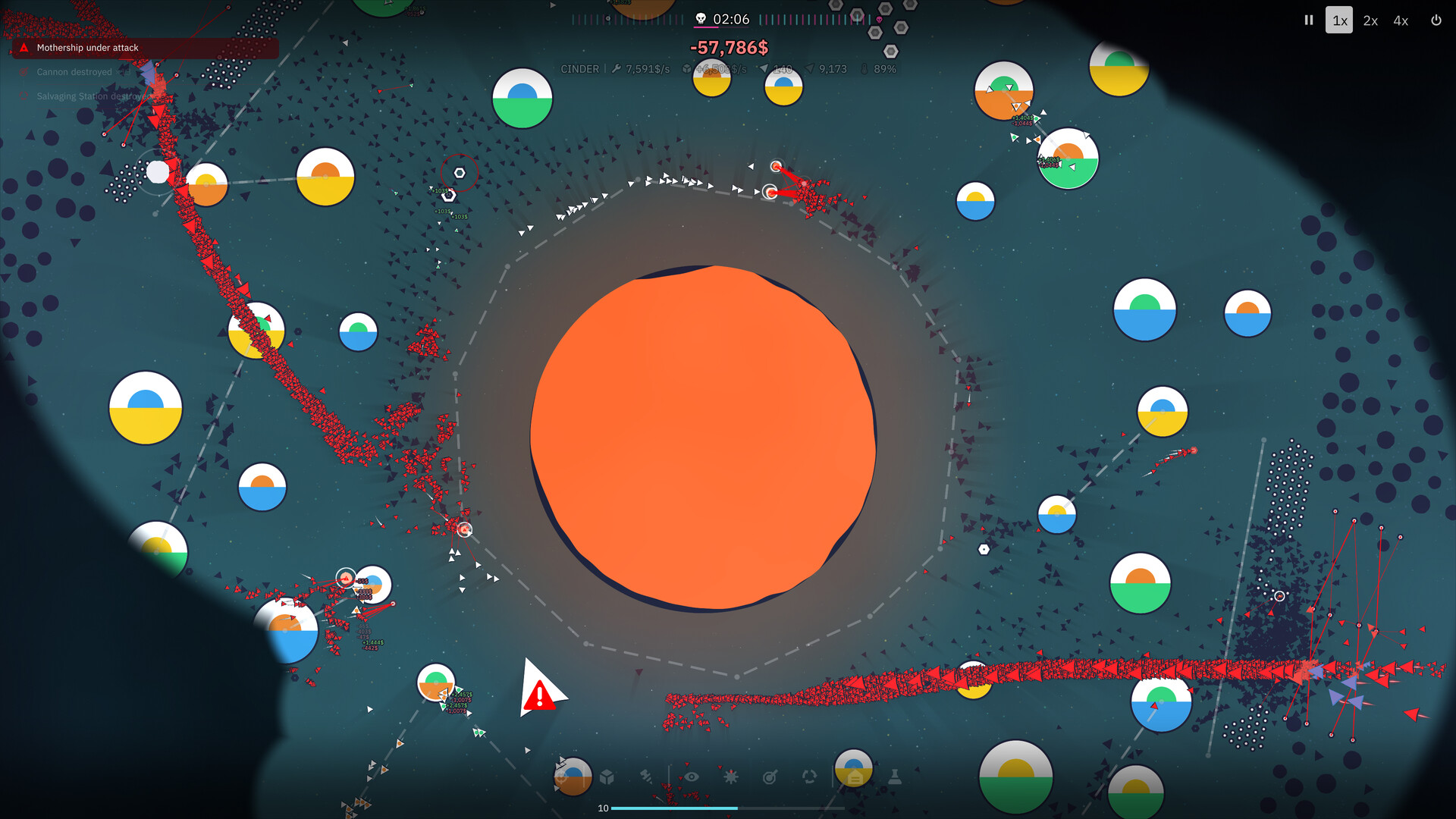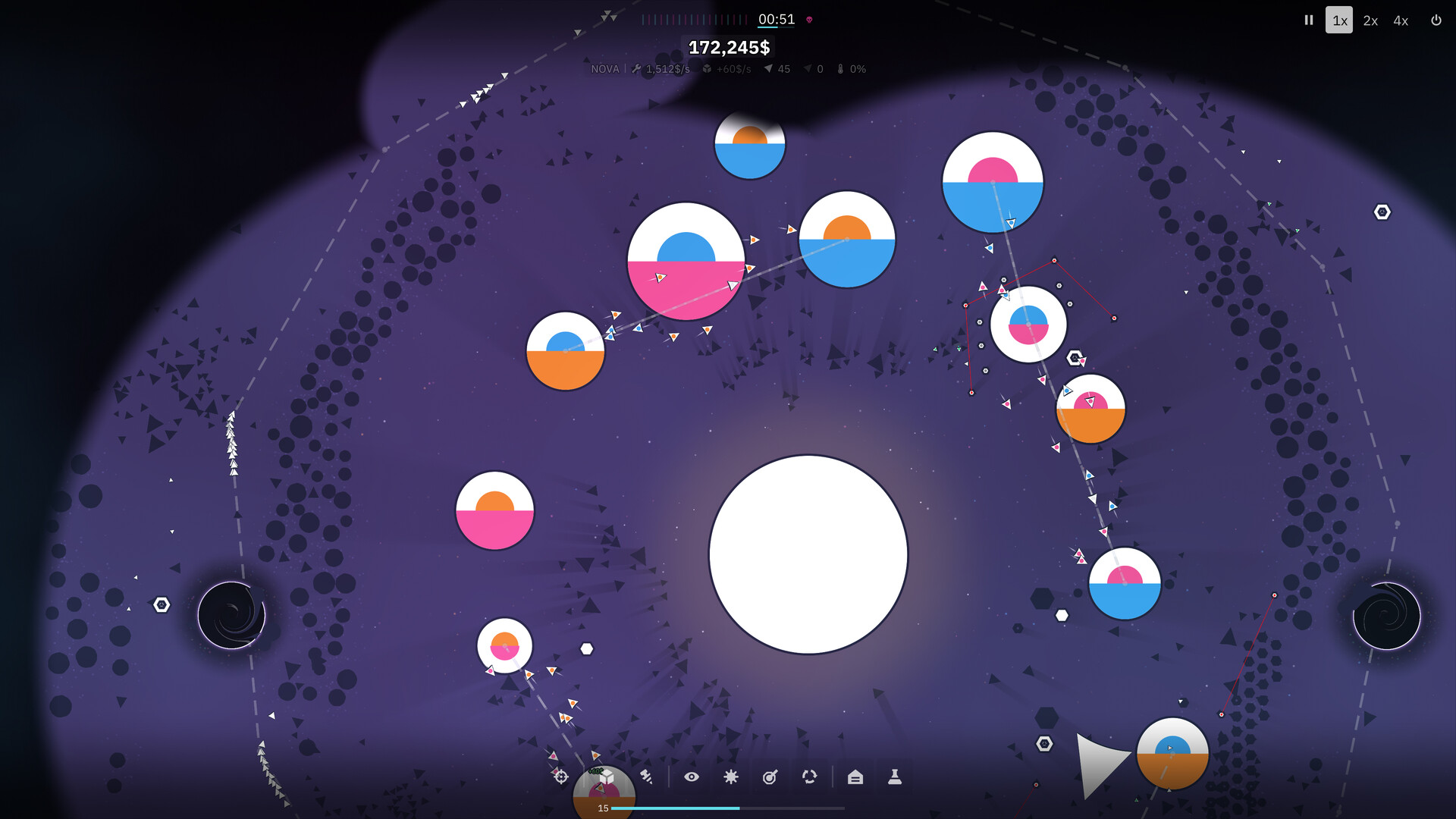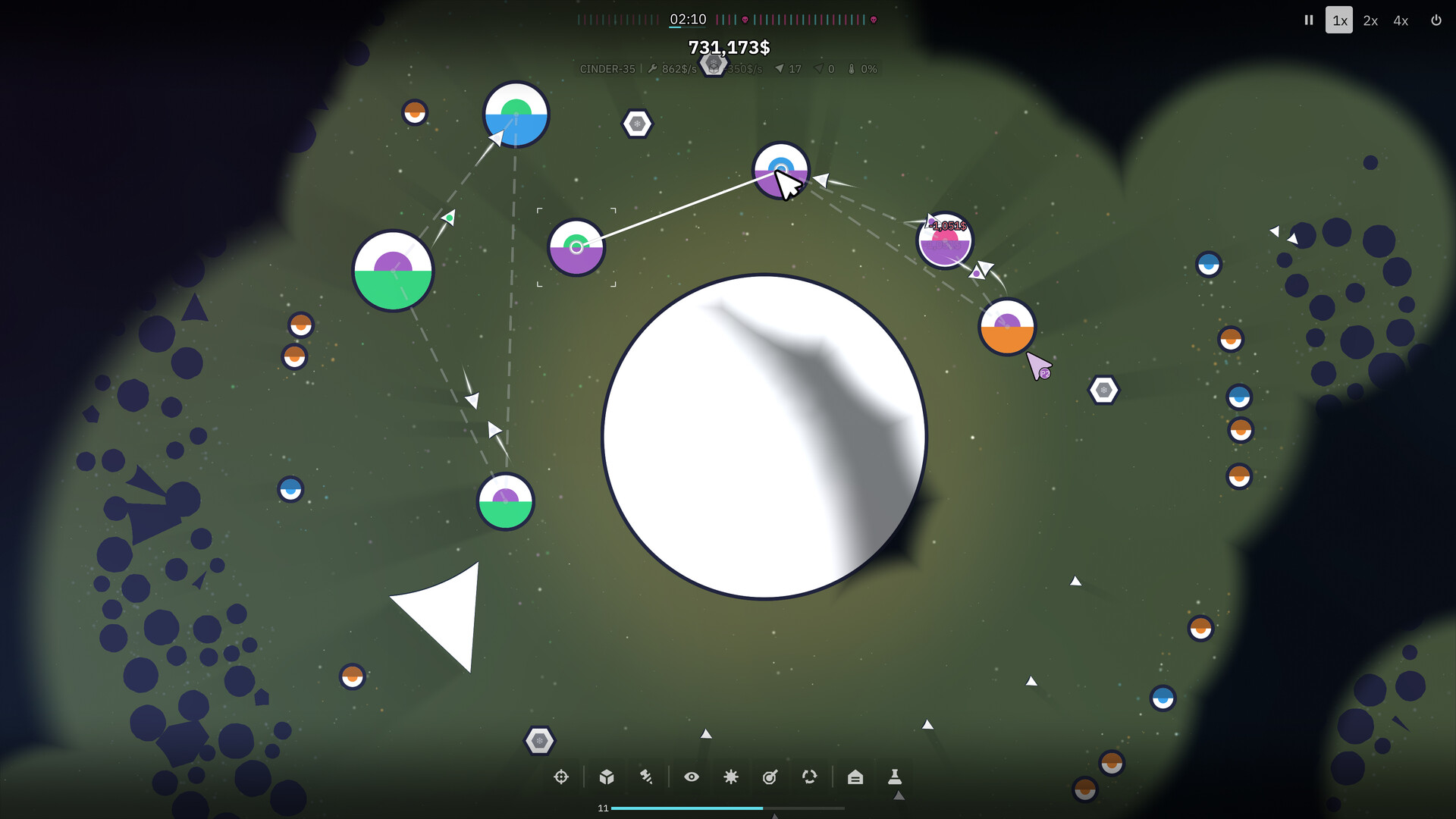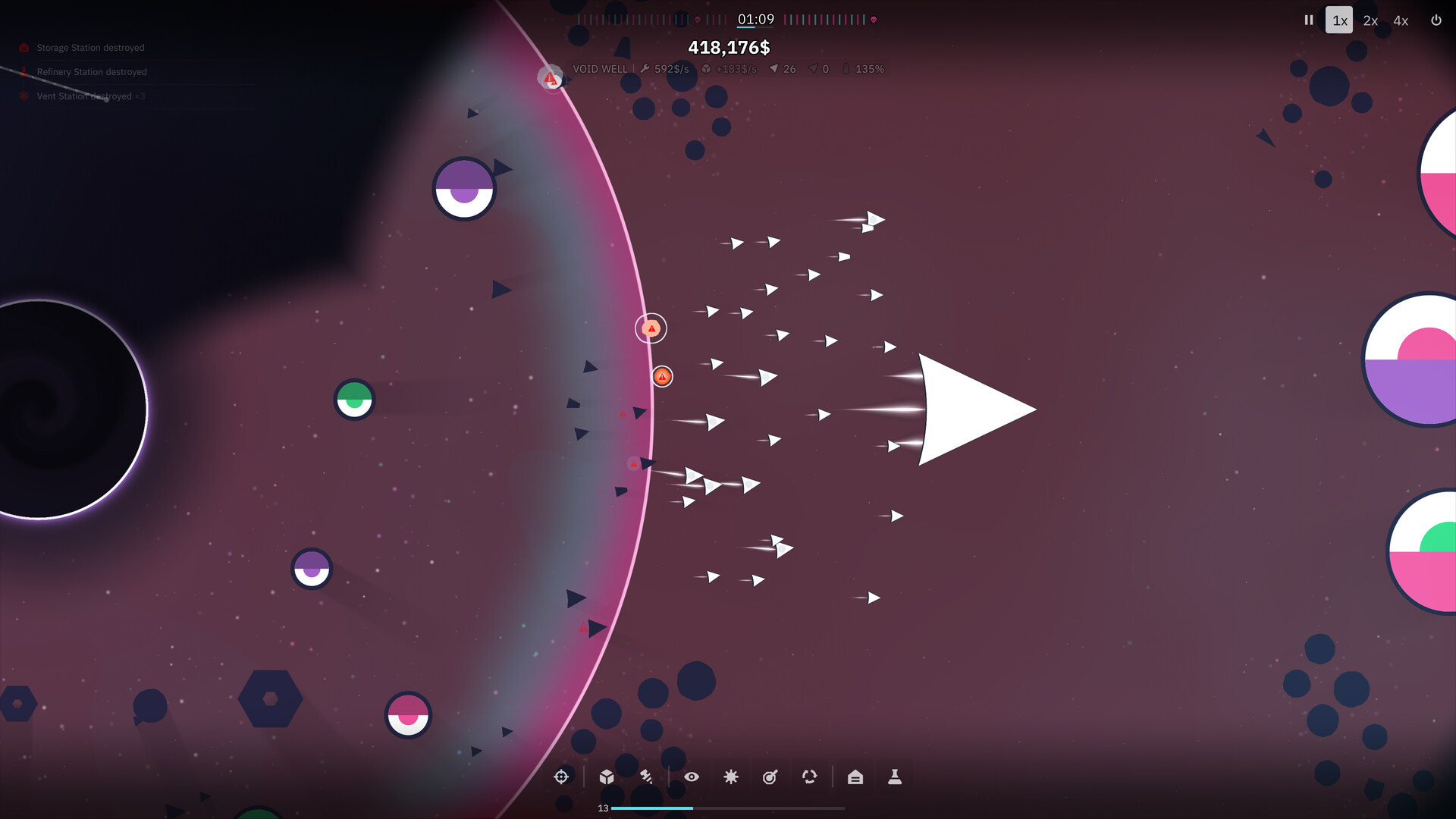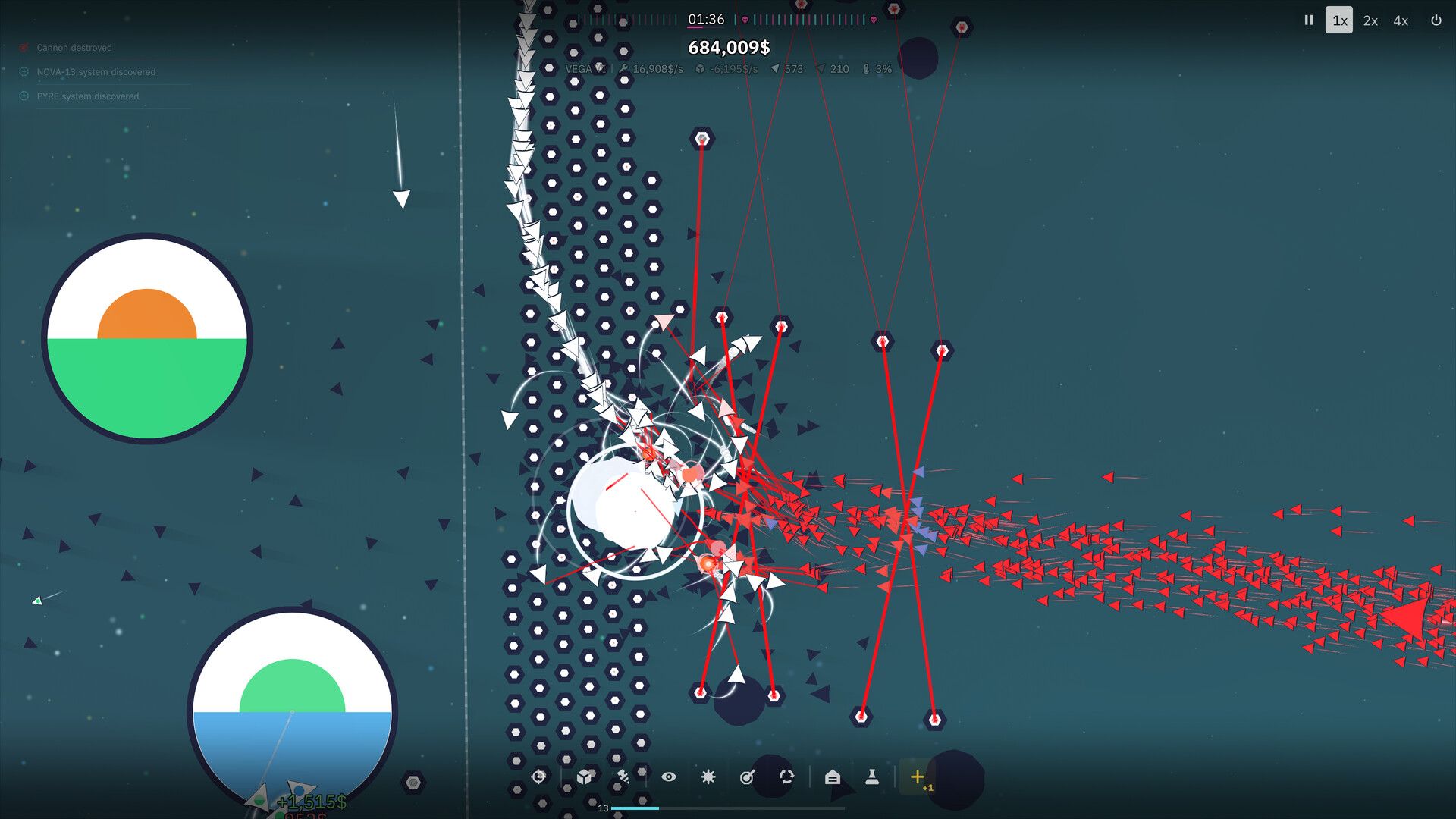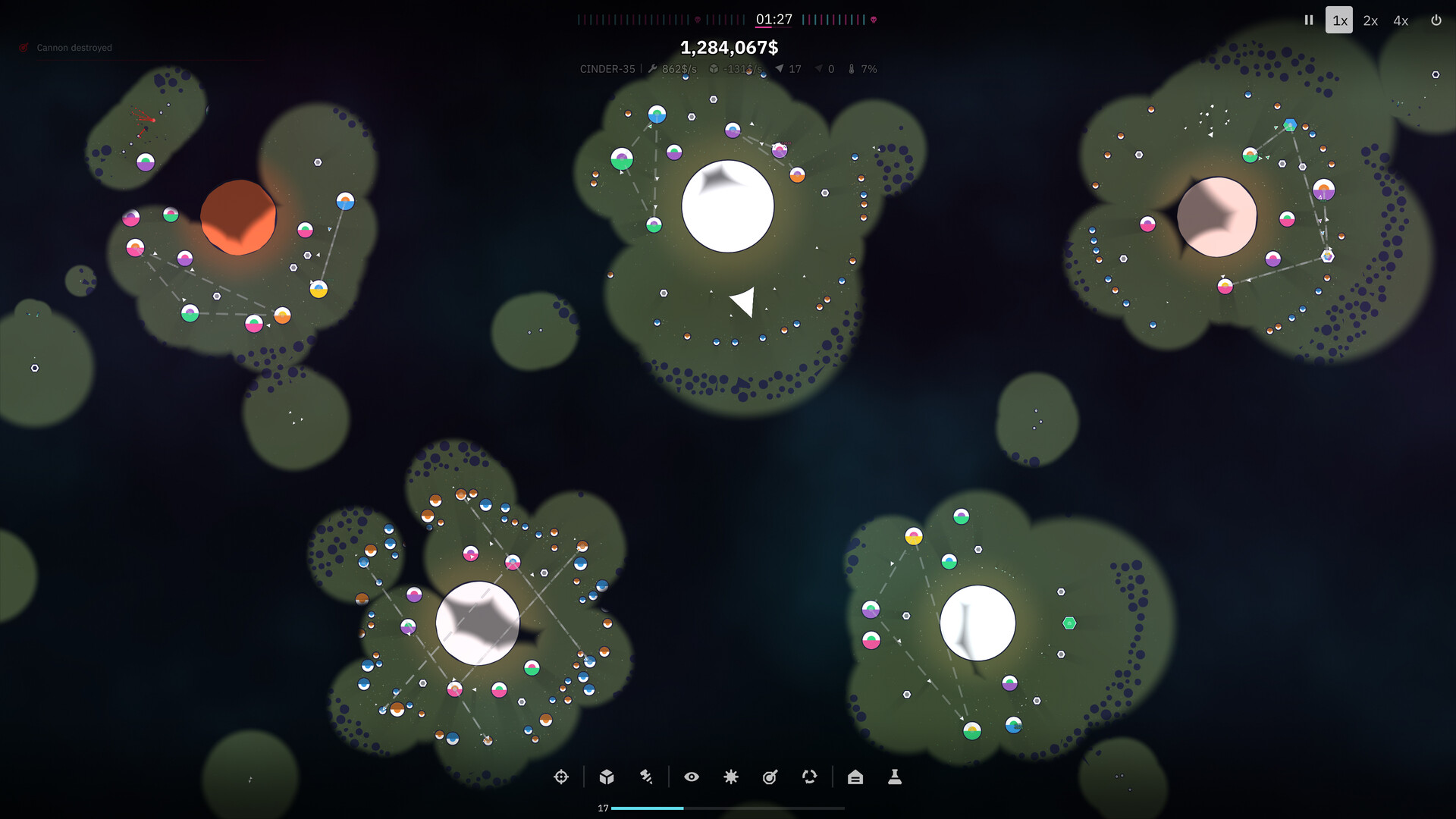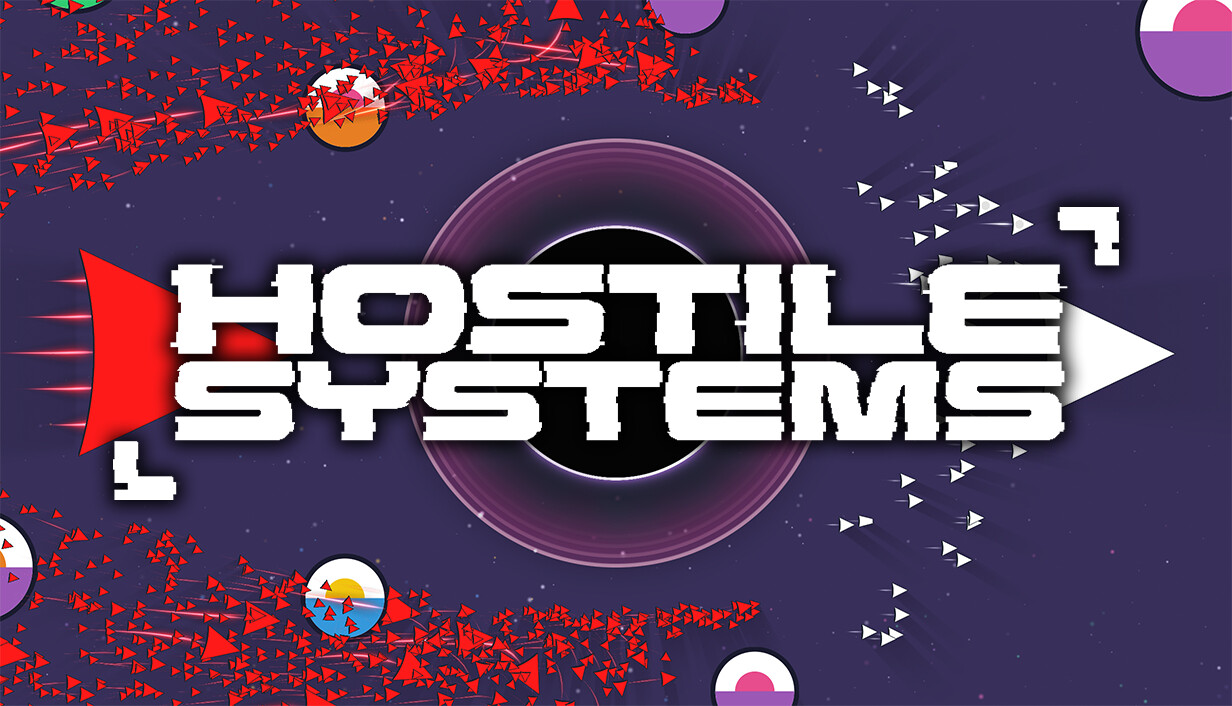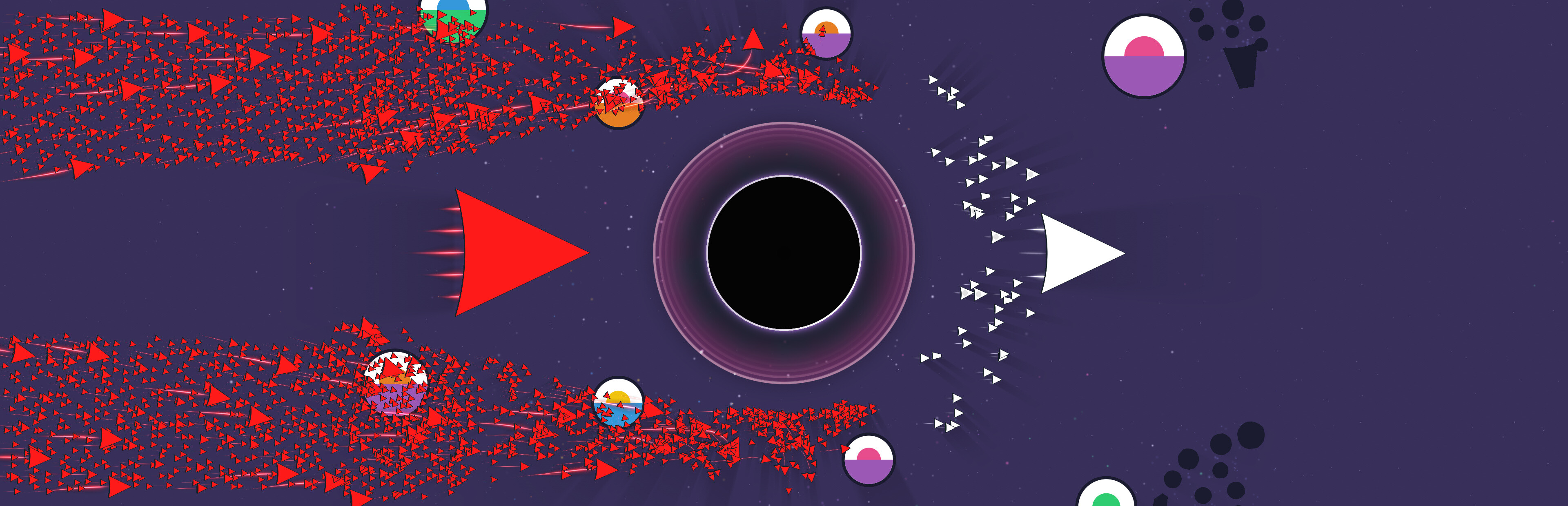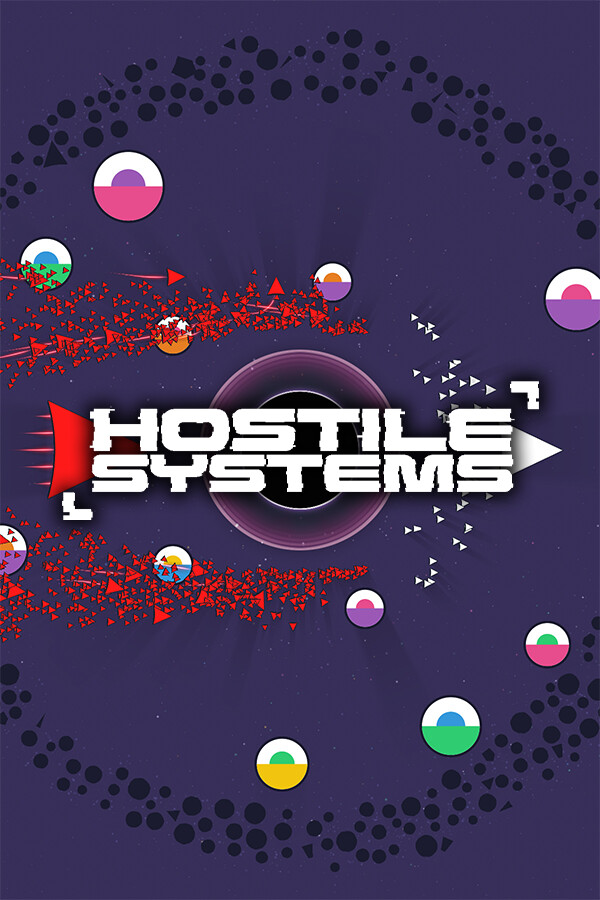

Hostile Systems is a space strategy roguelite with tower defense. Draw orders directly on the battlefield, build a trade economy across solar systems, and defend it against waves of enemy fleets.
For press inquiries, use our contact form.
Factsheet
- Developer
- Gammosaur
- Publisher
- Gammosaur
- Engine
- In-house
- Steam release
- Coming soon
- Platforms
- Windows, macOS, Linux
- Play modes
- Solo, online or LAN co-op
Key features
- Every unit is simulated individually, entirely on the CPU, so units can behave differently from one another.
- The current engine comfortably handles 500,000 entities in the world.
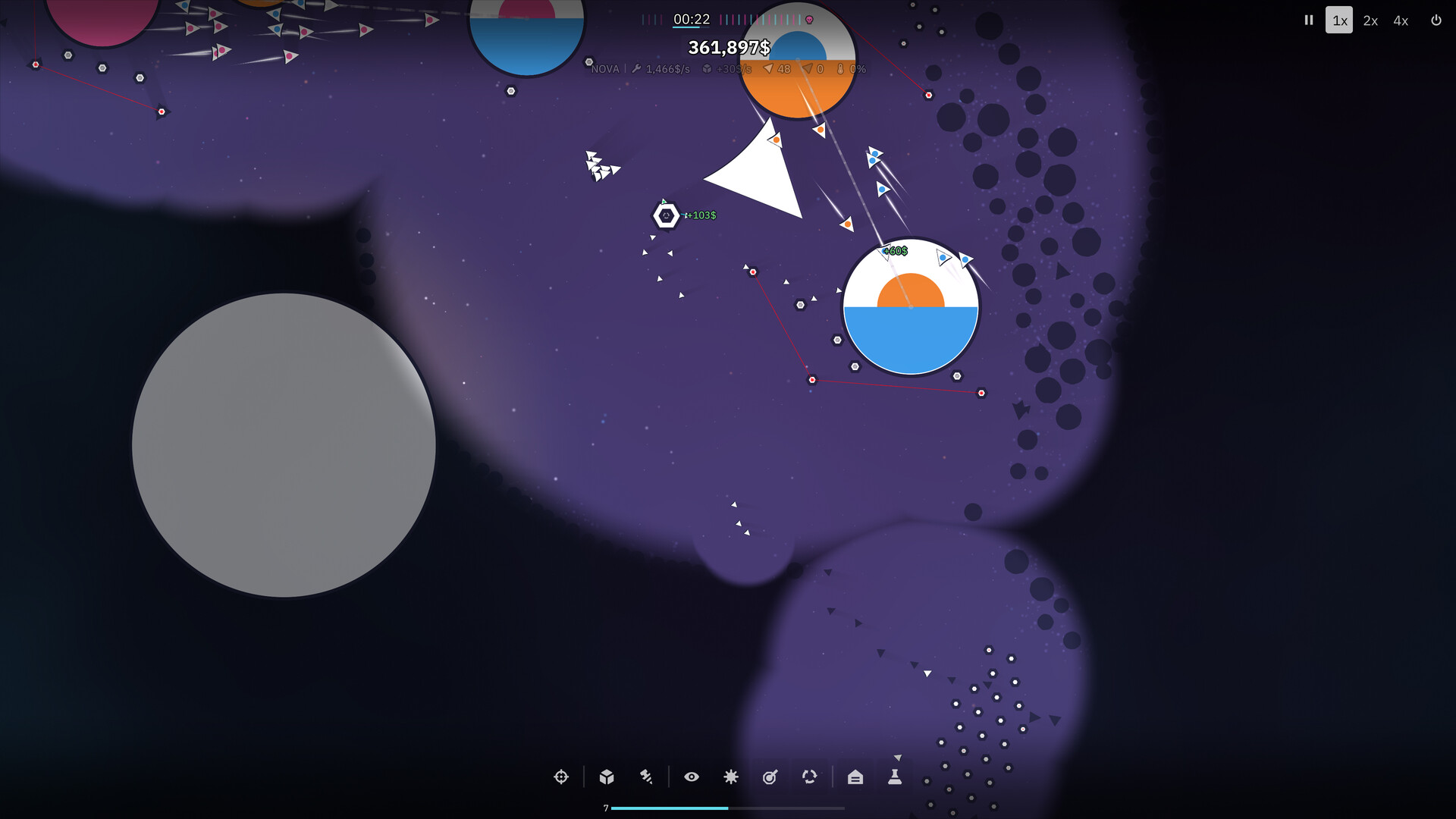
- Draw trade routes and fleet formations, then place mines, laser fences, and cannons along enemy approaches.
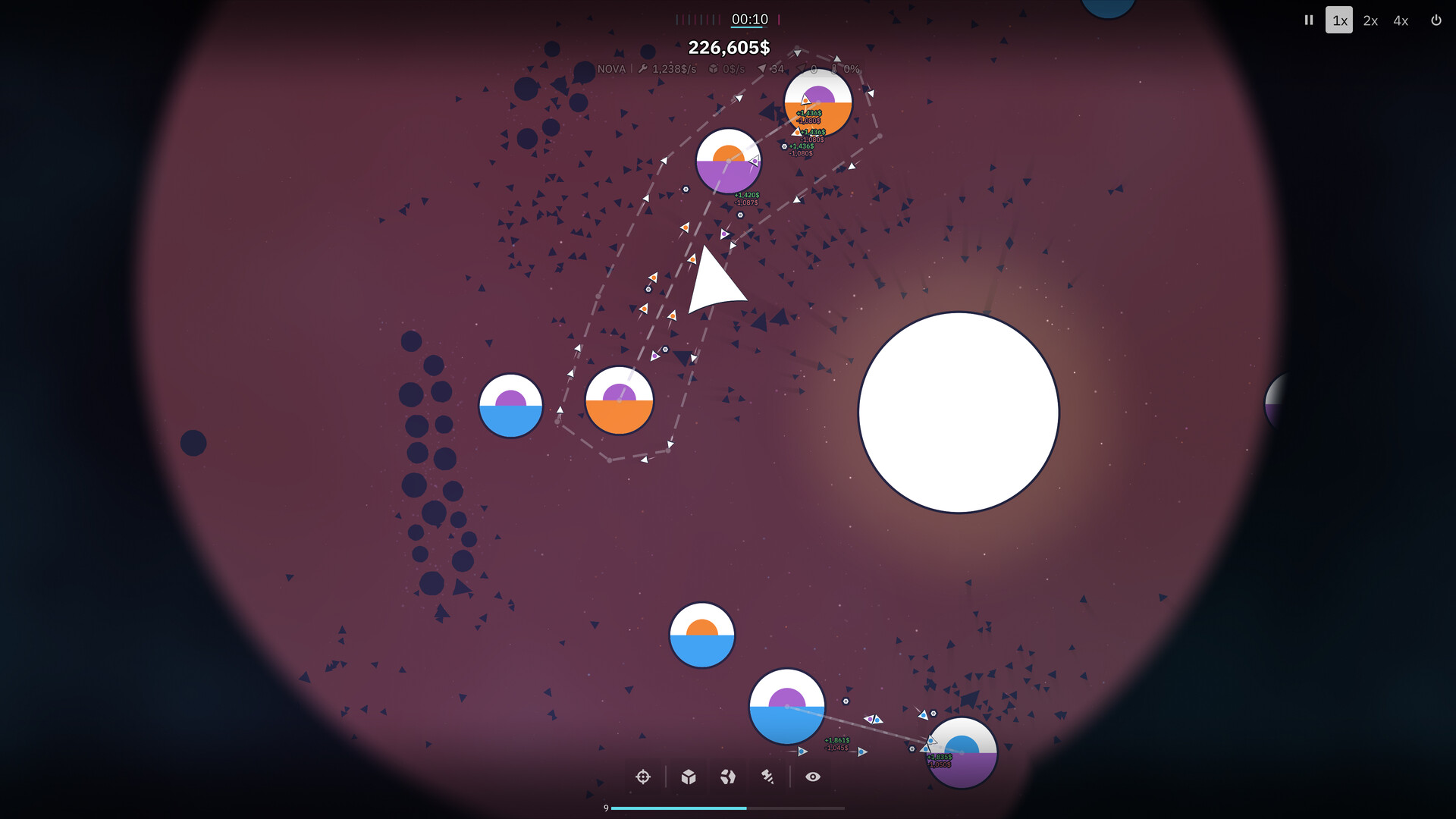
- Link planets through trade and salvage wrecks to fund new ships.
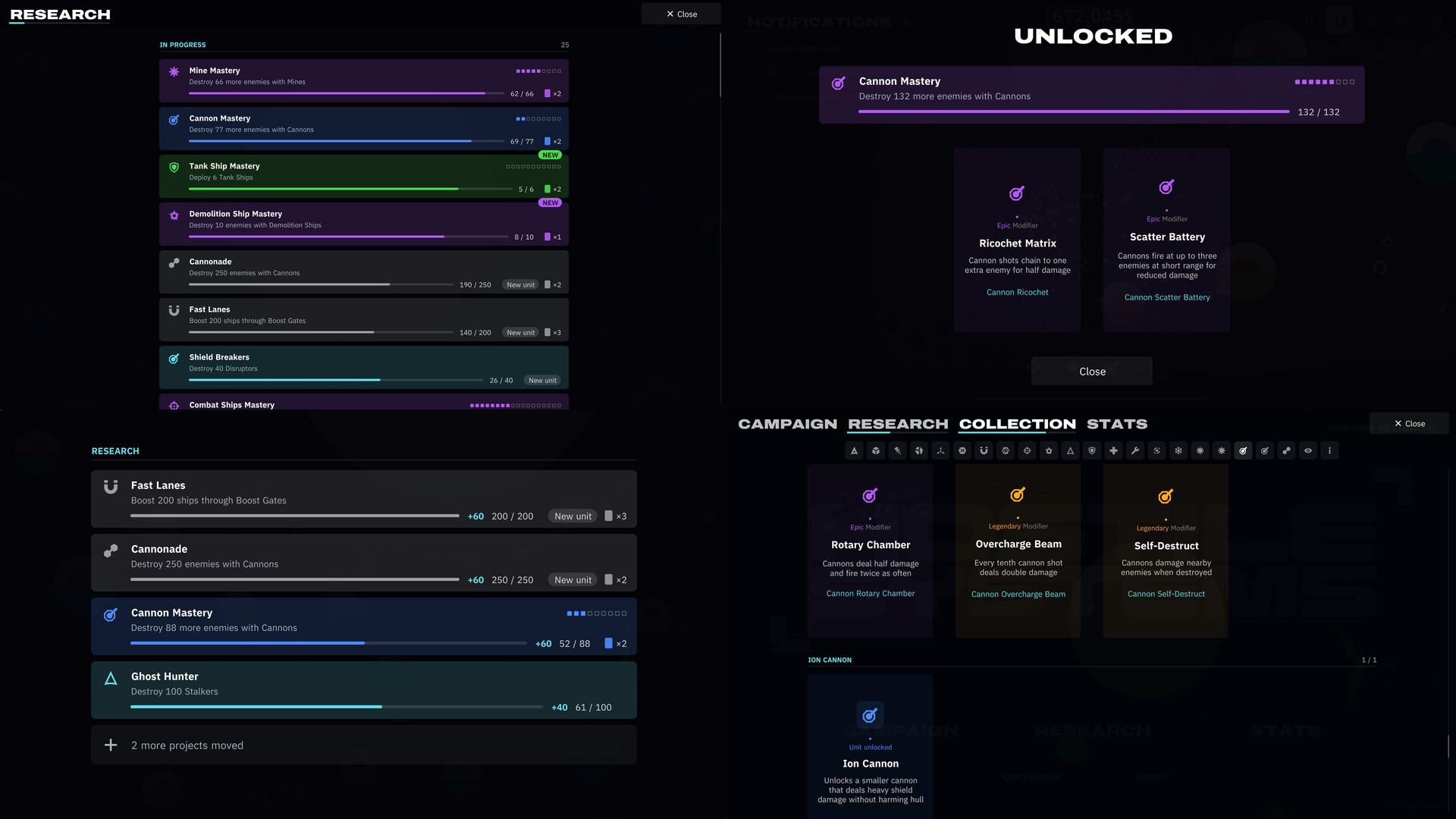
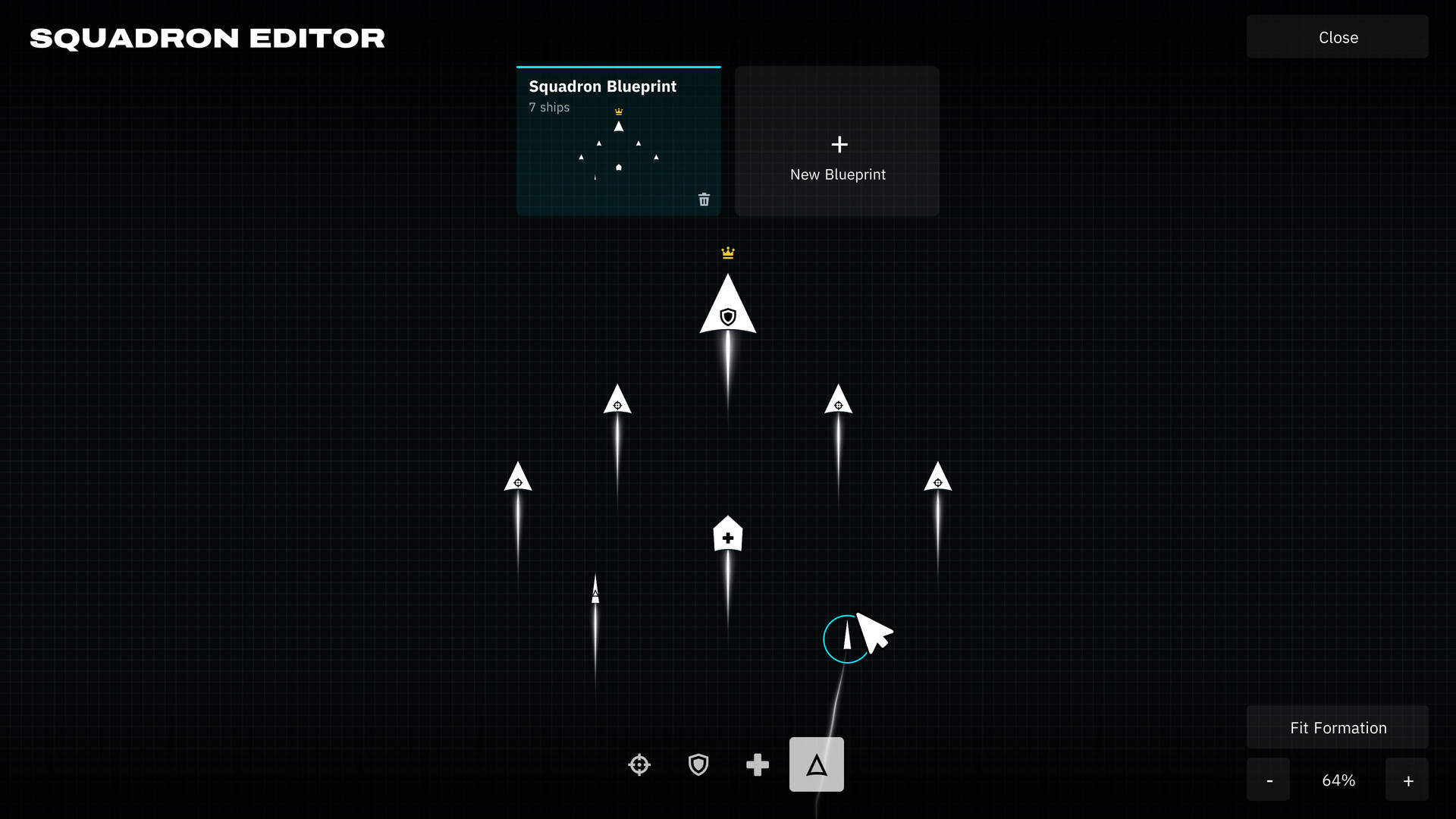
- Save squadron formations as blueprints and unlock units and upgrades through research.
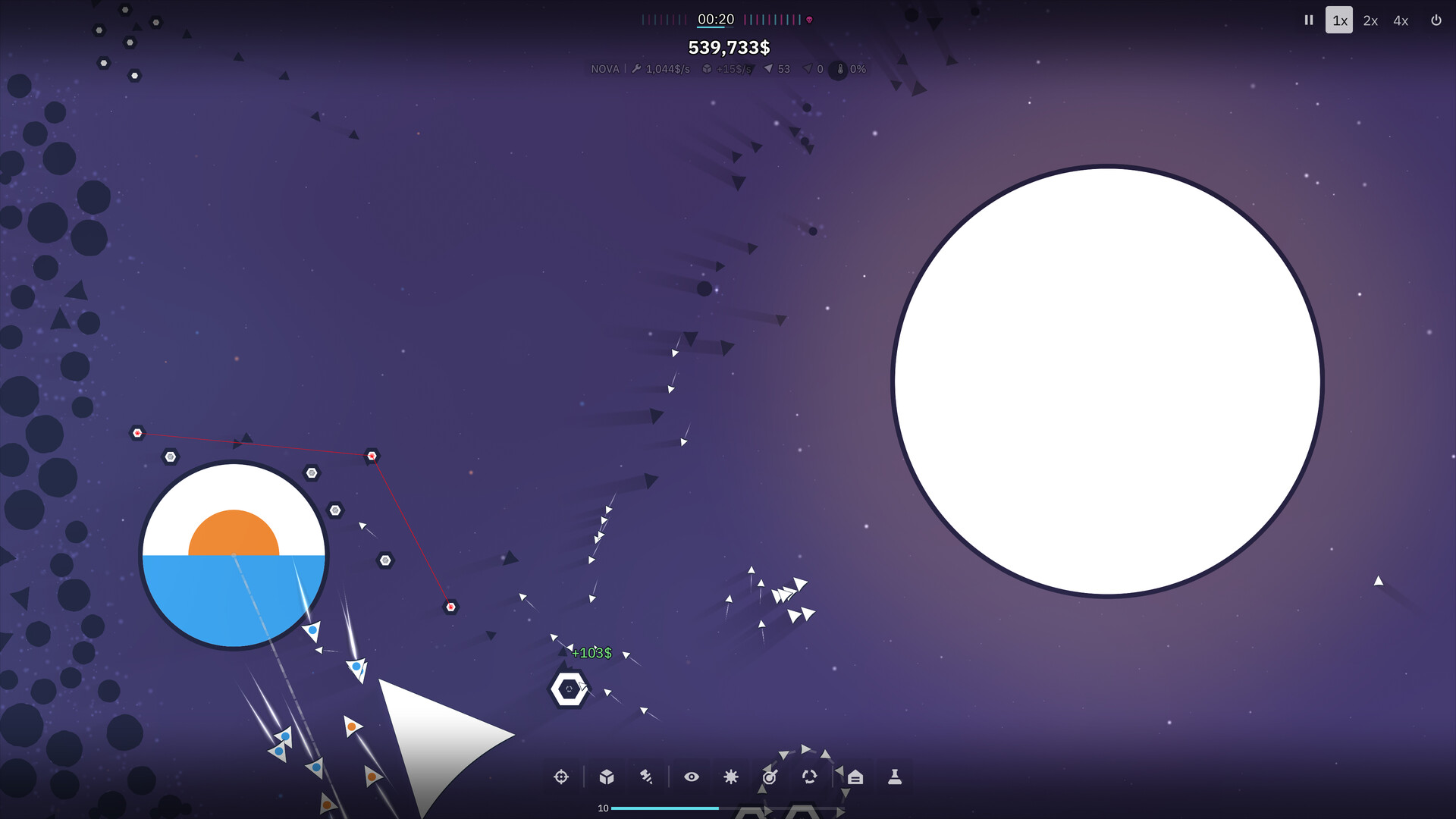
- Evacuate your fleet when an overheating star goes supernova.
- Play solo or share the battlefield and economy with a friend.
- Mod ships, stations, encounters, scenarios, and game modes with Lua scripts.
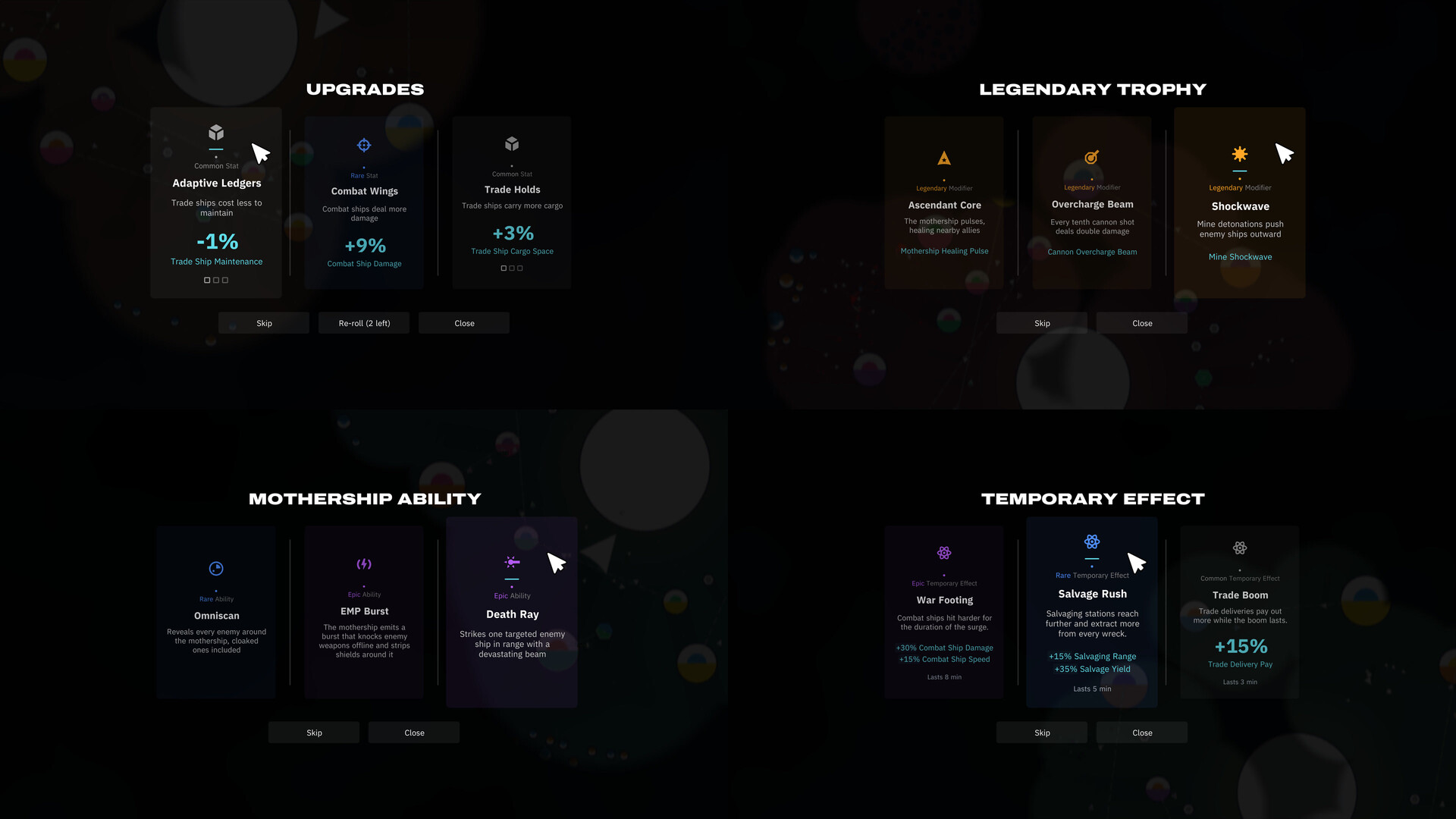
- In Streaming mode, Twitch chat can vote on upgrades and world event choices.
Development history
Hostile Systems began as Planetbridge, a mix of a match-three puzzle and a transport tycoon game. The prototype let players combine planets and run transporters between them.
The Planetbridge domain was already taken, and the name was easy to confuse with Planet Bridge, a hub for the card game. Hostile Systems sounded more like a strategy game.
After the prototype, the project went through three rewrites. The current game is built on the engine from 2020.
In 2021, the engine could simulate more than a million ships before more complex gameplay systems were added. Adding multiplayer was another major milestone.
Development archive
- 2011
- Play the original Planetbridge prototype Drag from one planet to another to create a trade route. Desktop only.
- 2015
- Planetbridge prototype gameplay
- 2016
- Original Planetbridge trailer
- 2017
- Planetary movement after the second rewrite Cursor-based sound demo
- 2020
- 100,000 ships and nearly 5,000 planets Formation Painting Spawners prototype
From the developer
Hostile Systems is my solo passion project. I’ve built it as a hobby alongside other work, coming back to it when I had the time and felt in the mood. I was after a particular feeling from the start, and I finally captured it in the game.
I love geometric shapes, so I simplify the art into forms I can program. I generate everything you see on screen in code, with fonts for the text. I use color, gravity, and the movement of fleets to give the game the fluid motion of a space aquarium.
Sound has followed the cursor for years. Move it near a group of ships and you can hear them buzzing around that spot, as if you were listening from inside the world.
Every map is procedurally generated, each piece of drifting debris has its own wobbly shape, and a dice roll can change how a world event plays out. The individual systems follow their own rules and affect each other, so a run can unfold in ways I didn’t plan.
Some of my favorite co-op moments happen when a friend and I forget to communicate. I’ll be waiting for enough money to deploy defenses, and suddenly our shared budget is gone because my friend spent it on something completely unnecessary. In another run, I’ll be holding back a river of enemies while they take direct control of a tractor ship and tow a mine around like a cart behind a truck.
Screenshots